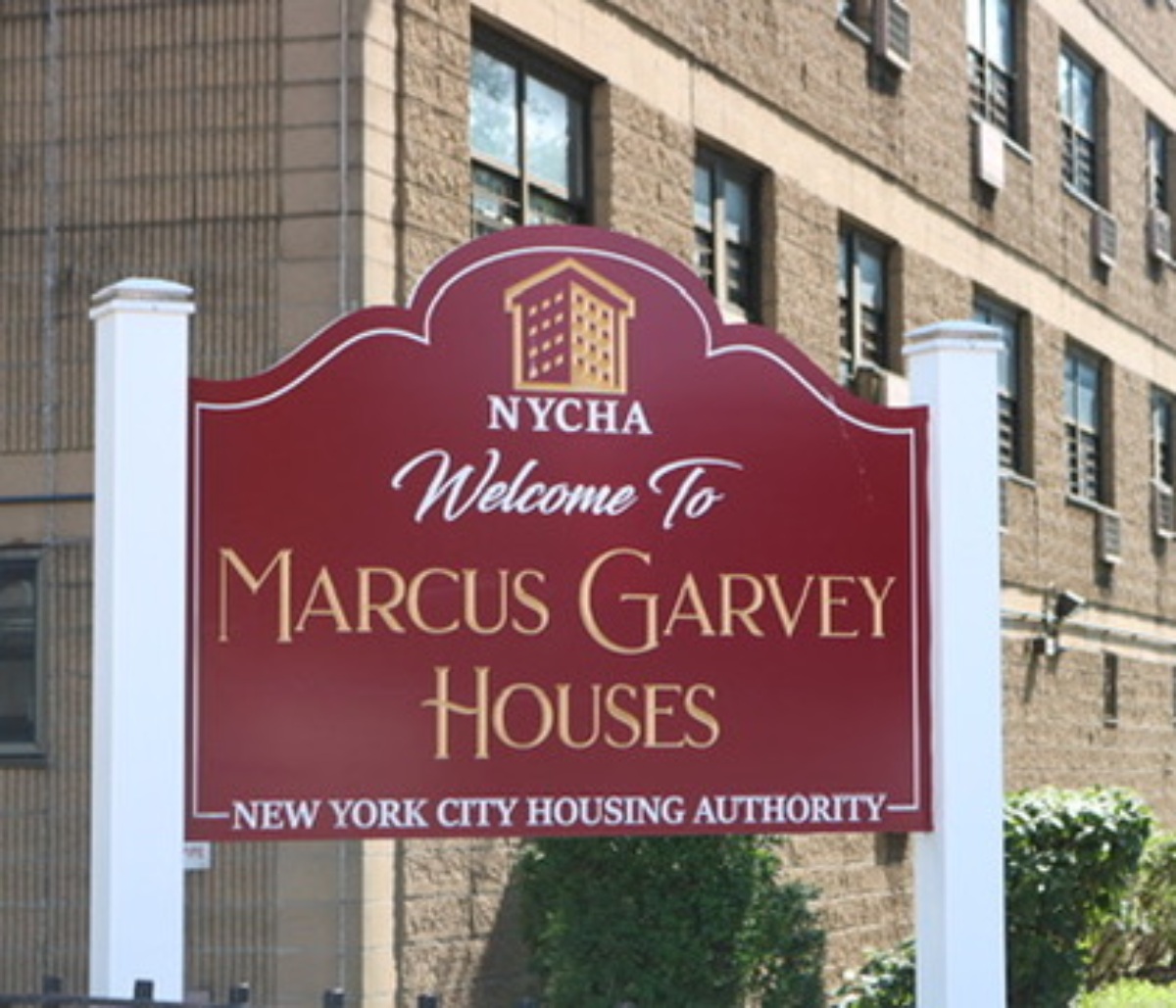
Marcus Garvey Houses are located in the Brownsville neighborhood of Brooklyn and are bordered by Dumont Avenue, Livonia Avenue, and Chester Street. Constructed by NYCHA in 1973, the development consists of more than 600 townhouse-style apartments, rather than the typical high-rise public housing complex.
The project emerged from an experimental urban planning approach aimed at creating a more human-scaled and community-oriented environment than earlier NYCHA designs. The buildings were designed with front yards, individual stoops, and tree-lined side streets in an effort to foster safety, connection, and a stronger sense of community.
(It was even included in a 1973 Museum of Modern Art exhibition titled Another Chance for Housing: Lowrise Alternatives as it began construction.)
Despite these intentions, Marcus Garvey Houses have long faced challenges including inconsistent funding, deteriorating conditions, and neighborhood crime. In recent years, efforts have been made to reinvest in and revitalize the complex.
NYCHA has partnered with private entities through the RAD (Rental Assistance Demonstration) program to carry out essential repairs, renovations, and long-overdue maintenance.
The development has also produced strong community leaders and activists, shaped by a culture of engagement and resilience. Named after the Jamaican statesman and Pan-Africanist Marcus Garvey, the development reflects a legacy of empowerment and pride that continues to resonate among residents.
In brief, Marcus Garvey Houses represent a bold experiment in public housing design, one that—despite setbacks—demonstrates resilience, ingenuity, and determination in Brownsville. The development remains a place where dignity and pride are fiercely preserved, and where generations of residents continue to confront and overcome adversity together.