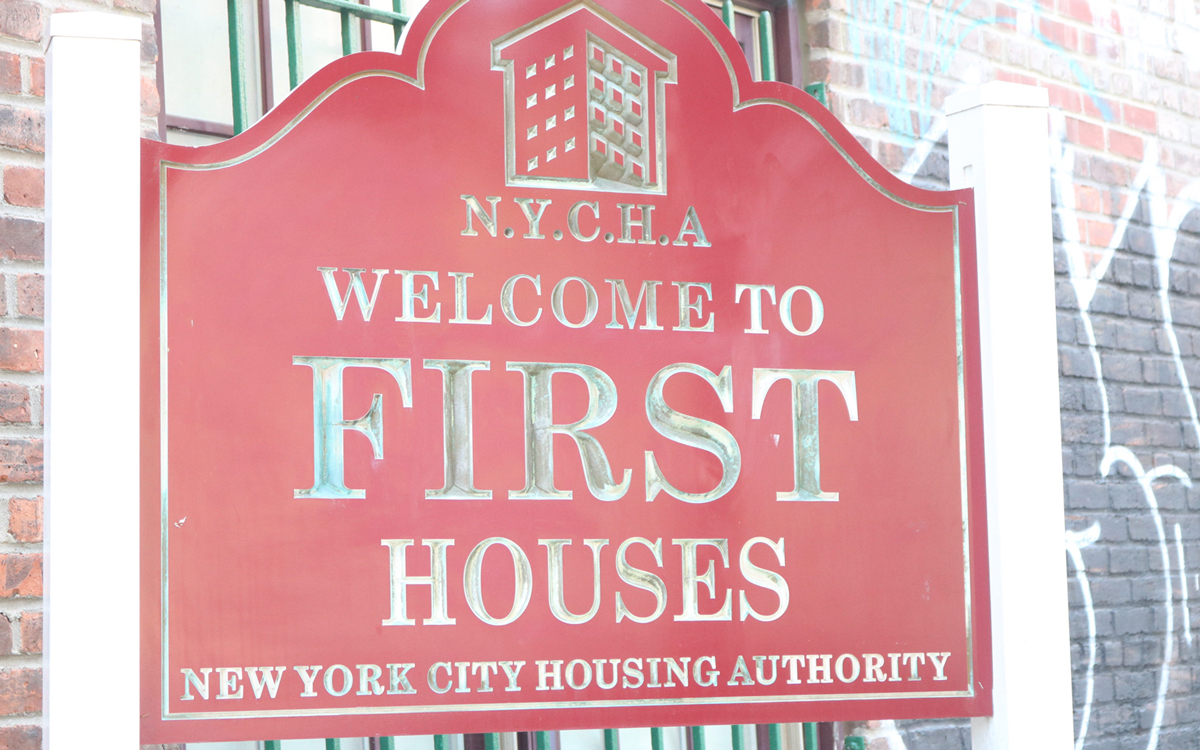
One of the first housing projects ever developed in the U.S., First Houses stands out in its East Village neighborhood of Manhattan. They are important because they were the start of public housing in America and are still occupied by working-class family generations today.
To this day, the First Houses buildings consist of eight four-story and five-story buildings bordering Avenue A, East 2nd Street, East 3rd Street, and First Avenue. As part of President Franklin D. Roosevelt’s New Deal project, it helped create the standard for housing policy across the U.S. at the time, in the early twentieth century.
Built in 1935, First Houses also set the standard for New York City public housing development. The sardine-like tenements that were prevalent during the time were bulldozed to the ground as part of the initiative, reusing building bricks to reconstruct an entirely new structure that would offer clean, safe, and new living conditions for working class folks to reside.
The First Houses have served as the model for NYCHA structures for the ensuing decades, but, similar to a great deal of the remainder other NYCHA structures, they weren’t unsusceptible to flaws of older buildings of the past, including dripping faucets and underfunding.
Despite all the hard times, the First Houses are an integral component of the frenetic energy that makes up the East Village, which remains a bustling, multicultural and iconic part of New York City. The First Houses not only set the stage for nationwide public housing, but showed that when government intervention is executed correctly, it can transform lives.
One of the best-preserved projects, its tenants can say with pride that they are part of a movement that altered the fate of the country’s home life for urban citizens.