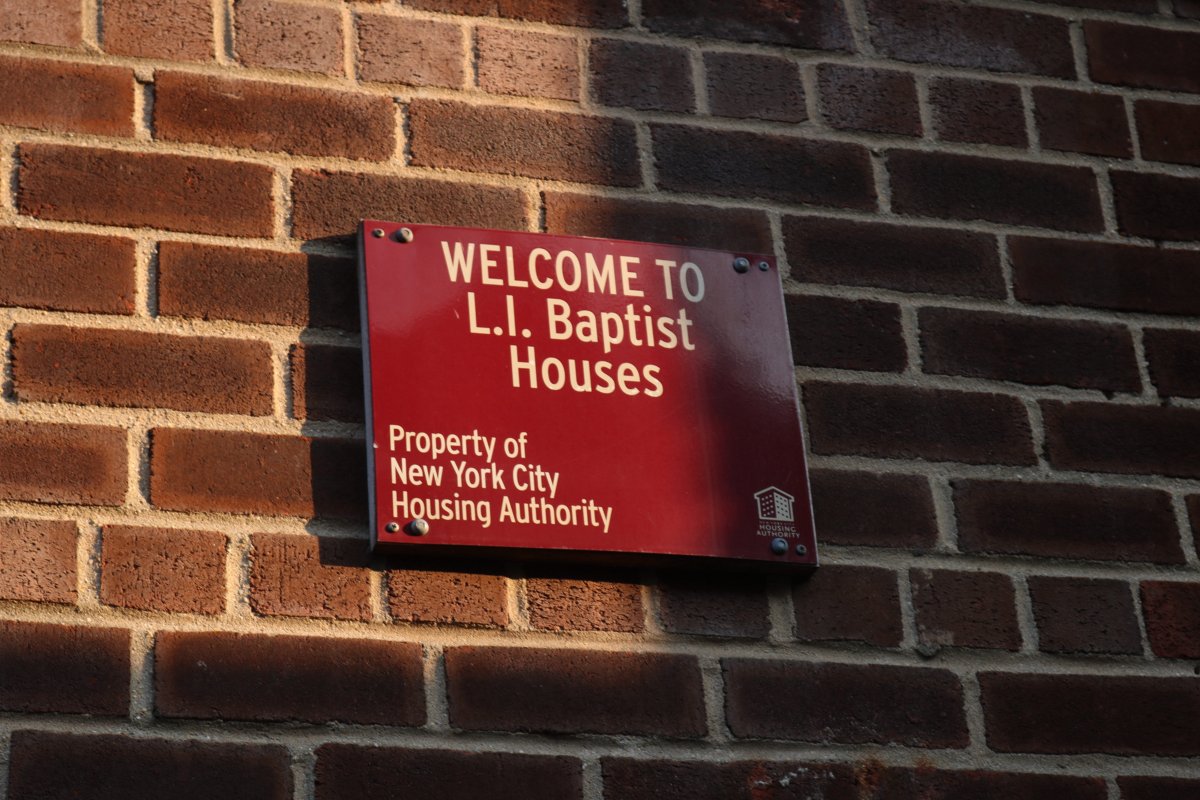
The L.I. Baptist Houses, also known as the Long Island Baptist Houses, are located in the Brooklyn’s Brownsville neighborhood, bounded Sutter Avenue and Williams Avenue.
Unlike most of the developments in the NYCHA, the complex was privately built in the early 1960s by the Baptist Churches of Long Island and was not originally part of Brooklyn’s public housing system.
The goal was to provide affordable, safe, and well-maintained housing for low-income households—particularly Black residents who were being driven out by urban renewal and rising rents elsewhere in the borough.
Compared to most NYCHA developments, the L.I. Baptist Houses are a low-rise complex with a relatively close-knit resident population. Despite limited financial resources and minimal city support, the community has remained self-reliant and proud.
The buildings have endured decades of informal maintenance by its tenants, while resident associations have fought persistently to secure improvements and protect tenants’ rights.
Church missions and community centers have played a key role in supporting youth, strengthening neighborhood bonds, and maintaining stability within the L.I. Baptist Houses community.
Though no widely known celebrities have emerged from the L.I. Baptist Houses, its true legacy lies in the working-class families who used the community as a foundation for better opportunities.
It is a story defined by grit, solidarity, and perseverance rather than headlines.
Often overshadowed by larger Brooklyn housing developments, the Baptist Houses remain, for residents, an enduring institution—one that continues to provide stability, shared purpose, and strength rooted in faith and community values.