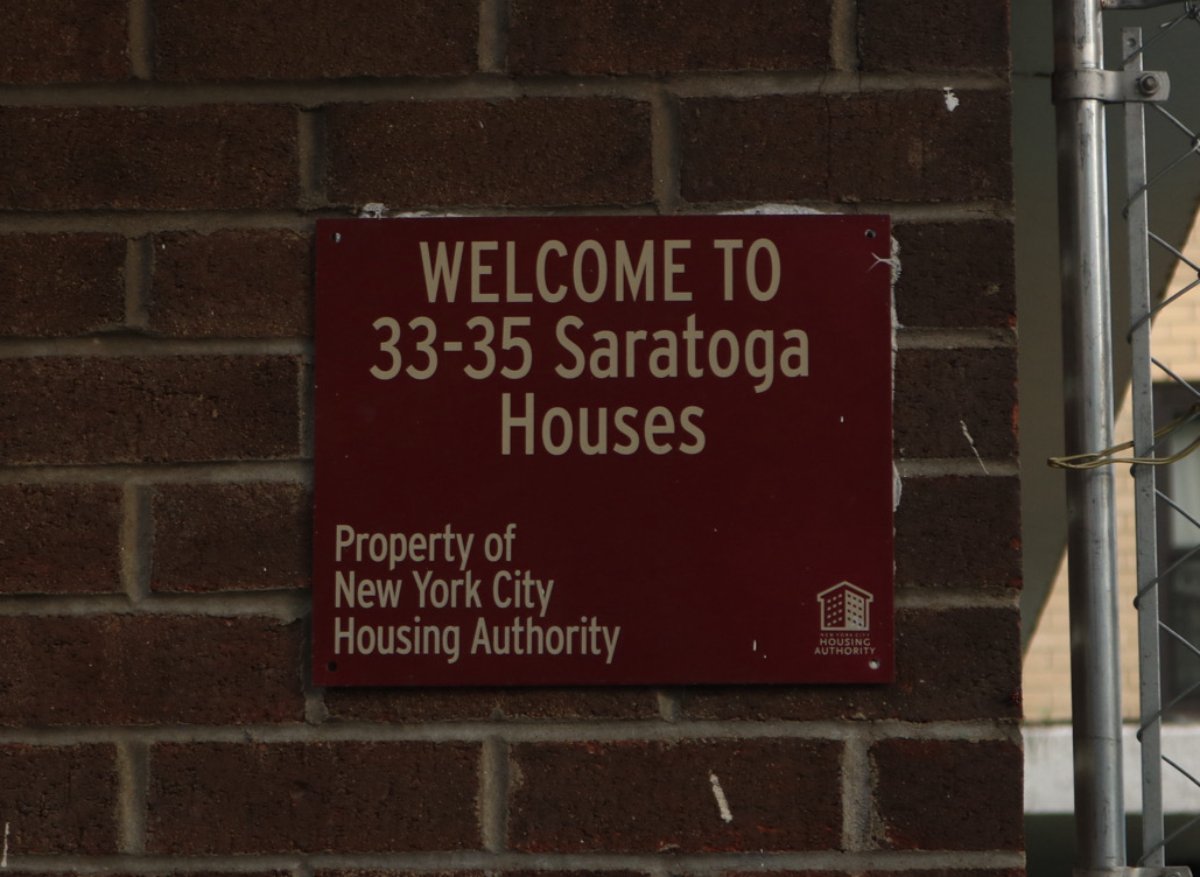
The 33–35 Saratoga Houses, or now known as Saratoga Village, sit in the Brooklyn neighborhood of Bedford-Stuyvesant, where Saratoga Avenue intersects Bainbridge Street.
Far from the titanic NYCHA developments that had swamped the mid-20th century, 33–35 Saratoga consists of a tiny complex comprising just two mid-rise buildings. Tiny as it may be, however, the project has grown tremendously, with many families that live around it.
Commissioned as part of record-breaking NYCHA development to respond to New York City’s affordable housing gap, the towers were intended to provide housing for low-income and working-class tenants from a historically African-American activist base.
33–35 Saratoga has been afflicted by some of the same problems which have beset city public housing campuses over the decades, including a burdened maintenance system, long waitlists for repair work, and neighborhood safety issues.
But its comparative size has allowed for a more connected community, one in which neighbors say hello to each other and neighborhood residents have banded together to create a sense of pride and community.
Though it doesn’t lay claim to creating any celebrity stars, all its alumni have become social workers, community organizers, and teachers who are changing the face of Bedford-Stuyvesant and beyond.
In a neighborhood where a project is not something to be ashamed of, 33–35 Saratoga is proof that even the most modest of projects holds within it powerful stories of survival, of culture, and of family.